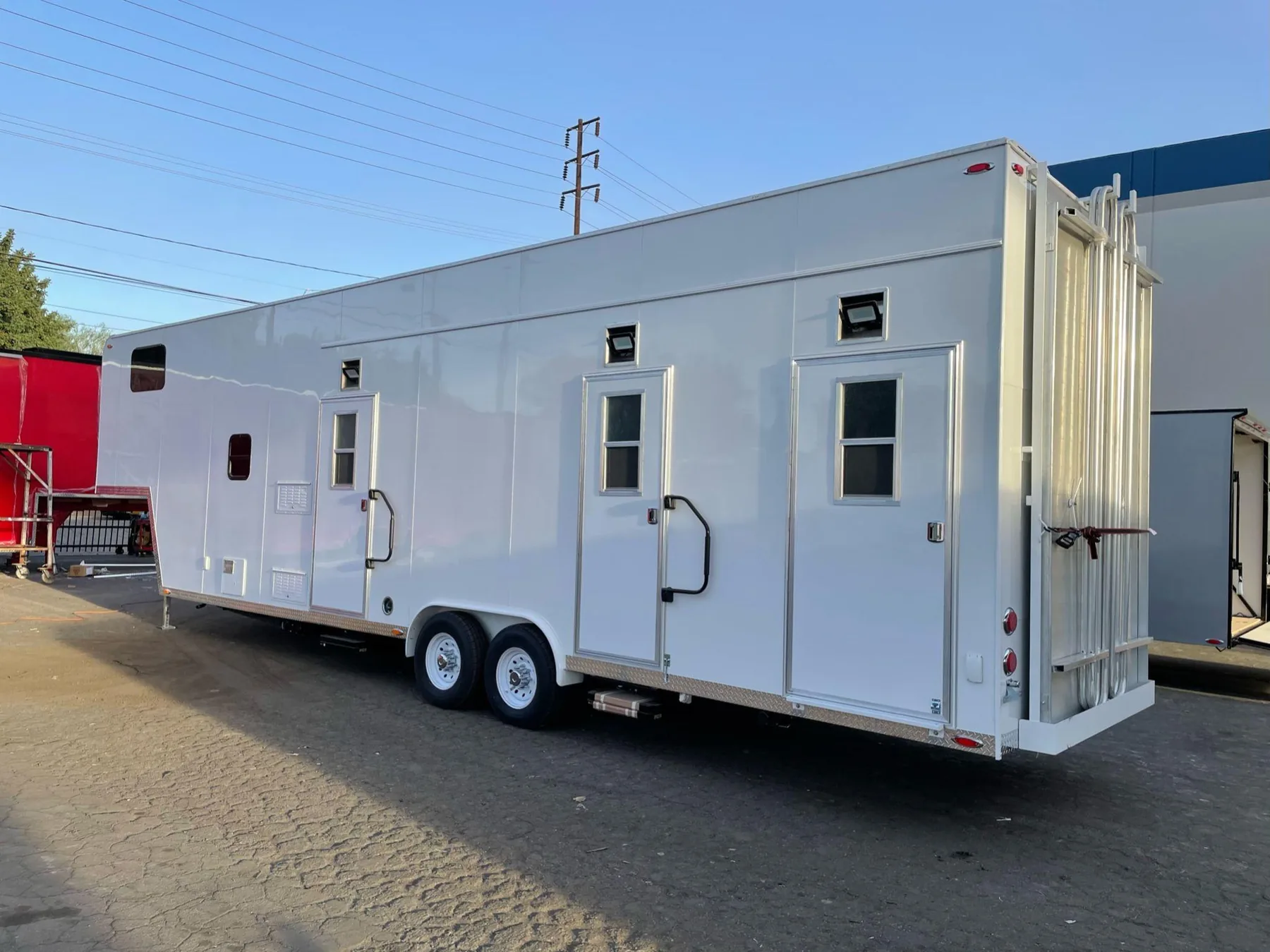
Understand the mission
Define the people, payload, equipment, workflow, deployment environment and what success looks like.
Tell us what the trailer needs to do. We'll help translate the work, equipment and towing requirements into a practical configuration.
A successful custom build aligns the platform, layout, utilities, equipment and access with the way the trailer will actually be used. The exact project sequence varies, but these stages keep the important decisions in the right order.
Define the people, payload, equipment, workflow, deployment environment and what success looks like.
Match length, width, height, running gear, load capacity and towing requirements to the intended use.
Resolve circulation, access, equipment placement, work zones, storage and service clearances.
Coordinate electrical, lighting, HVAC, plumbing, communications and specialized equipment.
Select exterior protection, interior surfaces and details that suit the operating environment.
Turn the approved plan into the trailer, checking fit, finish and installed functions through construction.
Review the finished configuration and the operation of installed systems before the trailer goes to work.
Answers can be approximate. The point is to uncover requirements before they become expensive changes.